
The best safari photograph you take will probably not be the closest lion. It will be the moment you lowered the camera a little, waited, and let the landscape into the frame.
Light
- Shoot early and late. Near the equator the golden light is short — the first and last hour of the day are everything.
- Use the clouds. Green-season skies give drama and soft, even light.
Settings
- Fast shutter speeds — 1/1000s or faster for action.
- Focus on the eye. If the eye is sharp, the photograph works.
- Burst mode for anything that moves.
Gear
- A zoom in the 100–400 mm range covers most wildlife; a wide lens tells the story of the place.
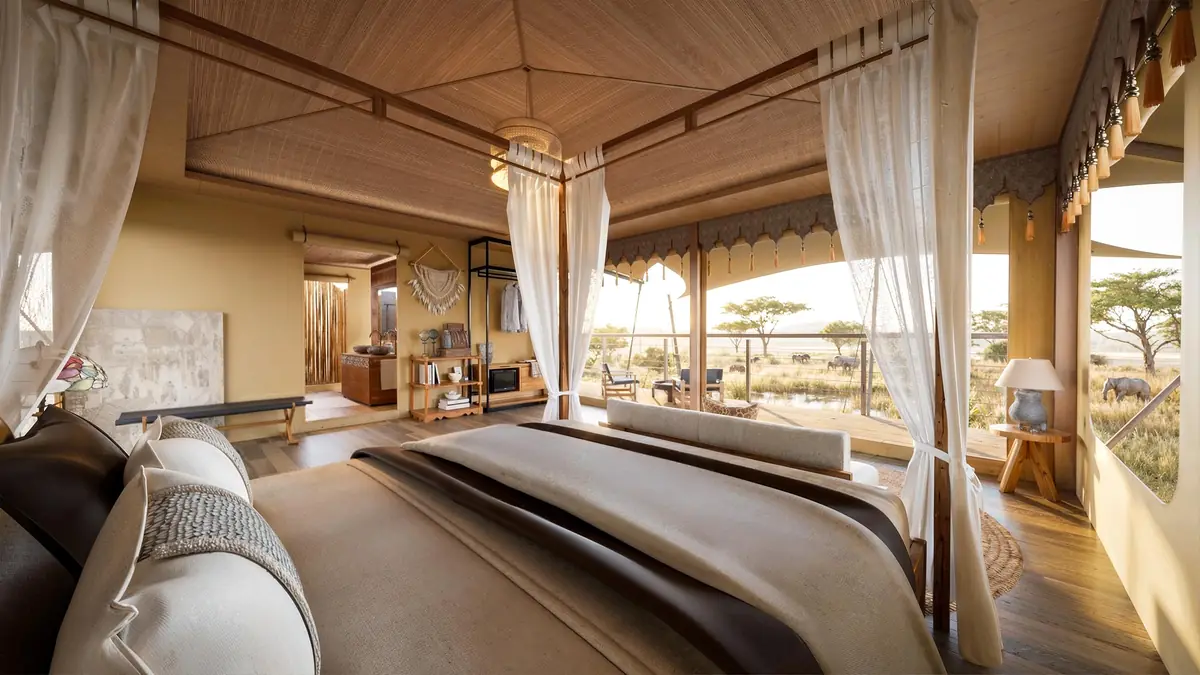
- Bring spare batteries and cards. Your tent has solar power and USB charging.
- A beanbag rests well on a vehicle frame — a tripod does not.
Composition and etiquette
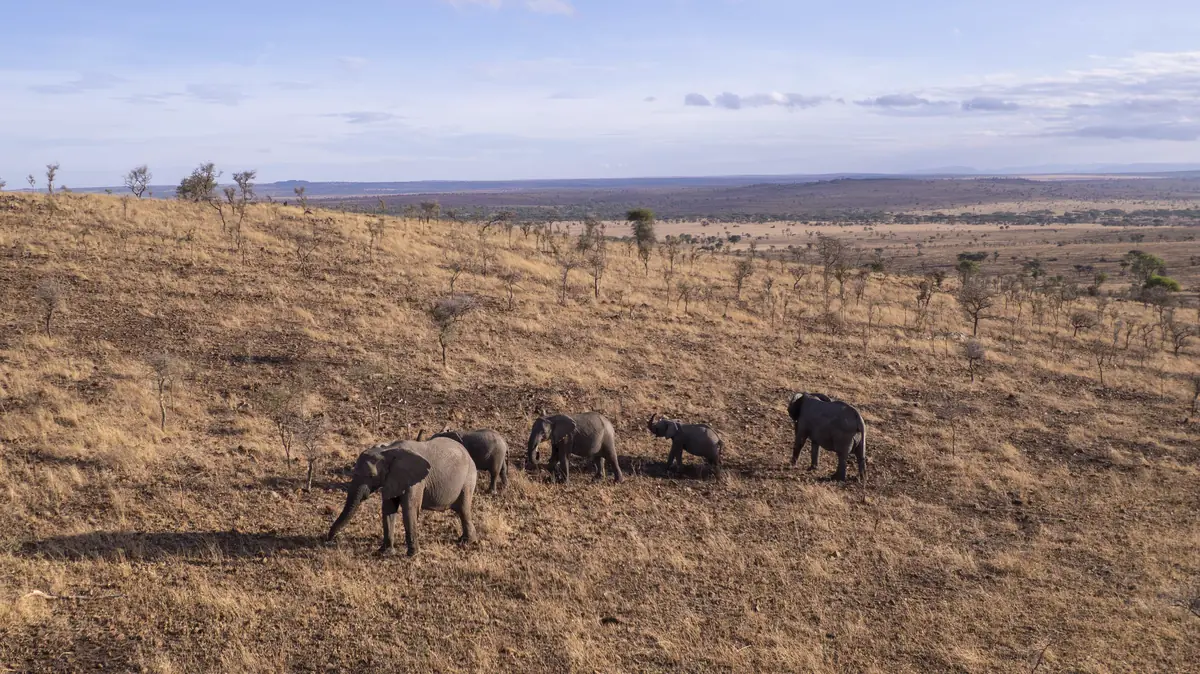
- Include the habitat. An animal small in a vast landscape often says more than a close-up.
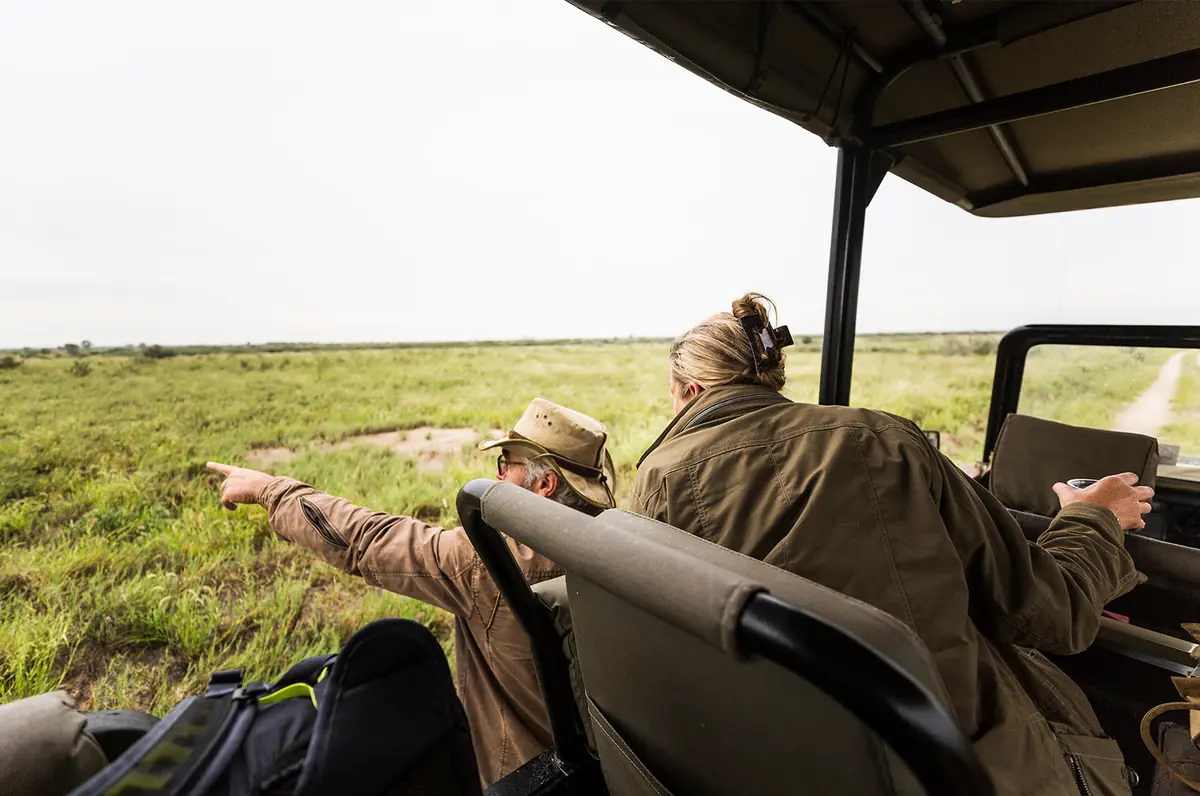
- Be still and quiet. Ask the driver to switch off the engine for sharper images and calmer animals.
Phone photographers: use the native camera, tap to focus, and do not zoom digitally — crop later instead.
See our gallery for inspiration, and our experiences for the best moments to be out with a camera.
Questions & answers
What lens should I bring on safari?
A zoom in the 100–400 mm range covers most wildlife; add a wide lens for landscapes and camp.
Can I charge camera batteries at camp?
Yes. Tents have solar power and USB charging.